By John G. M. Sharp
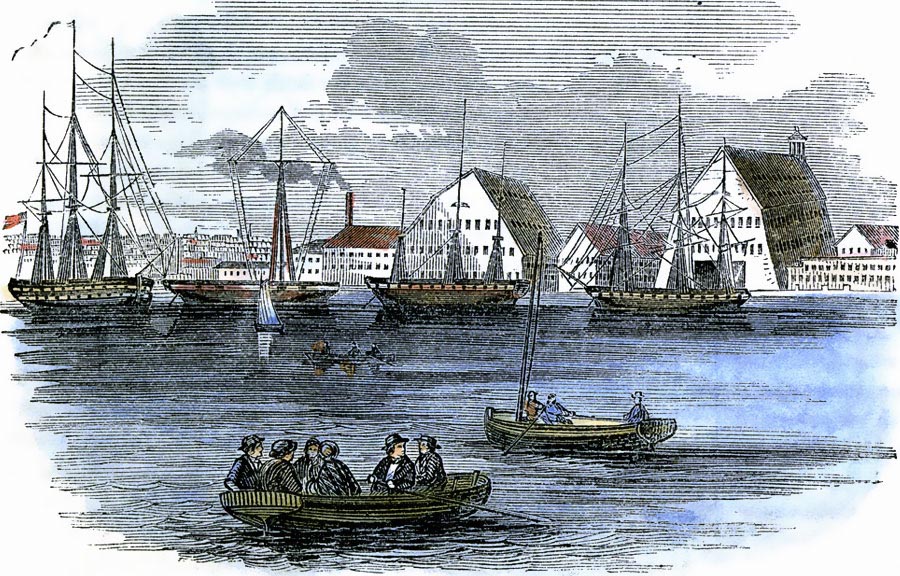
Waterview, Brooklyn Navy Yard
Lithograph, Harper's Magazine, 1857
Waterview, Brooklyn Navy Yard
Lithograph, Harper's Magazine, 1857
Introduction: This group of transcribed documents illustrates five vital decades of Brooklyn and the Brooklyn Navy Yard early history. The selected documents were primarily written by or about the mechanics and laborers who built the ships and armaments. This collection also includes essential documents related to the struggle for the ten hour day and successful strike of 1852. To these I have transcribed naval regulations which governed employee work and pay. To my knowledge most of these documents have never been transcribed or reprinted.
Although a fixture of the city of New York for over one hundred and fifty years, a complete history of the New York Navy Yard, better known as the "Brooklyn Navy Yard" is yet to be written. What histories exist with one notable exception concentrate on brief profiles of the various commandants, and well known naval officers stationed in Brooklyn. In these volumes civilian workers appear mainly as anonymous individuals in the background of ship launch photos, indeed far more space is given to ship data and images than to the employees who actually built them. Notably absent from most of these works is any serious investigation of the long history of the civilian workforce. As one scholar has noted, "Despite its status as one of New York City's historic icons, the historical literature on the Brooklyn Navy Yard is negligible and of what exists there is scant mention of its labor history." My purpose is not only to collect and transcribe documents relating the history of the civilian workforce but to convey something of the workers experience. In compiling this selection I have kept editorial comment and secondary sources to the minimum in order to let the mechanics and laborers to the extent possible "speak for themselves" and to avoid what one distinguished historian has labeled the "condescension of posterity."11. Thompson, E. P. The Making of the English Working Class, Vintage Books: New York, 1963, p. 12.
In 1801, the Navy Department purchased land at six different locations to serve as places where naval shipyards could be established. The six were located at Portsmouth, New Hampshire; Boston, Massachusetts; Brooklyn, New York; Philadelphia, Pennsylvania; Norfolk, Virginia; and Washington DC. For the first two decades, the Washington Navy Yard was the best developed; while the navy yard at Brooklyn, in contrast, was still emerging. In fact for nearly twenty years, BNY acted solely as a ship repair and fitting out facility and would only launch its first ship, the frigate USS Ohio, in 1820. Located on the Wallabout Bay, BNY was isolated from New York City until the 1883 erection of the Brooklyn Bridge. This out of the way location was a challenge, but the new shipyard faced environmental ones as well as it was situated largely on mud flats and creeks, and subject with each incoming tide to flooding.2 The letters of Jonathan Thorn, Isaac Chauncey, and Samuel Evans, illustrate the unique difficulties and circumstances faced by the shipyard’s proximity to the vast and booming metropolis of New York City. From the beginning competition for skilled labor in New York was a constant reality. As early as 1806, Lt. Thorn complained to the Secretary of the Navy, "Labor is so extravagantly high that I fear it will be difficult to keep men on board to whom the vessels can be entrusted in part for those wages."
2. Brooklyn Daily Eagle Brooklyn New York, 15 December 1918, p. 31
Many of the early commandant’s letters provide details on employment and labor issues. The letters of the first commandant Lt. Jonathan Thorn, show the amazing scrutiny and control that the navy exercised even over minor personnel matters; see 22 and 28 July 1806. Likewise Commodore Isaac Chauncey’s letters tell of his attempts to fix the decrepit state of the yard infrastructure; see 3 August 1807. In another note of 9 October 1811, Chauncey refers to Brooklyn as "this village." In other dispatches he reveals the shipyard workers weak bargaining position (see his decision to reduce carpenters wages, 5 and 11 January 1808). This wage reduction caused considerable animosity and quickly became a political source of contention (see Chauncey’s 24 February 1808 letter http://genealogytrails.com/ny/kings/navyyard.html to the Secretary of the Navy). In reducing employee wages Chauncey was not acting alone, rather he was following long standing private sector work practices, where employers paid workers per diem, and then only when there were sufficient funds. Chauncey vigorously defended his action and questioned the workers right to complain at all, stating they "have asserted that they are all American citizens. This is not fact for some of them are not only British subjects born but not citizens by adoption - another strange position has been taken by the petitioners that by employing foreigners or enemies to the country to do the publick work…" Despite their protest the workforce remained essentially "day laborers" rapidly downsized after cuts in the annual naval appropriations.3 Similarly during winter months when weather conditions, like strong winds and severe cold, constrained workers to sustain periods of forced idleness large, numbers of employees were dismissed (see 27 February 1838 when 500 laborers were laid off).
3. NARA RG 125, Records of the Judge Advocate General Case Number 403 Capt. Samuel Evans Entry 26 – B dated 20 March 1823, see Specifcations 3 and 5 "Navy Yard aforesaid used and employed day laborers or workmen belonging to the said Navy Yard and then actually being in the pay of the United States.
The early navy yard was highly structured organization with the commandant at the top surrounded by a small group of trusted naval officers and civilian master workmen who formed the apex of the trade hierarchy. Just below them were the quartermen, subordinate leaders of several work crews, they were assisted by "lead men" or crew leaders. The whole structure depended on skilled trade mechanics or journeymen. The term mechanic in the early nineteenth century referred to a skilled tradesman who had successfully completed a five or six year trade apprenticeship in a particular field. Each trade had trainees or apprentices, young workers in training. Each trade apprentice signed a binding legal indenture or contract typically with master workmen to return designated service in exchange for trade knowledge. Periodically the Department of the Navy issued apprentice regulations (see 1 May 1817 which specified minimum ages and pay rates). Next were the laborers who composed the vast majority of navy yard employees. A typical apprentice indenture is that for Donald McKay (see 24 March 1827). Laborers were the unskilled men who performed arduous heavy but necessary work, such as digging, pile driving, and pulling or hauling of ships and ship parts.
Nineteenth century naval payroll and muster typically comprised employee name, occupation and wage rate (see payroll for 1 to 15 October 1840). For the years 1806-1856 these documents have no mention of ethnicity or race. Discrimination though was widespread as early as 17 March 1817. In response to complaints from white employees, the Board of Navy Commissioners, issued a circular to all naval shipyards effectively banning black employment. In 1862 Admiral Hiram Paulding publicly confirmed in the New York Times that to his knowledge no African American was ever employed at the navy yard.4 Likewise for this same period I was unable to find any women employed on the navy yard employment records. The first mention of female employees is found, following the Civil War as seamstresses. Nearly all the newly hired seamstresses were the widows of men killed during the war or on government service. For decades these women sewed national flags, naval pendants and canvass gunpowder bags and naval awnings and flags for squadrons and ships.5 Women were first employed in the navy yard as mechanics in September 1942.6
4. Writing in 1862 Admiral Hiram Paulding in response to rumors that "colored men" were being employed and taking the place of white mechanics and laborers stated, "A report having been published to the effect that a number of men had been discharged from the Brooklyn Navy-yard, and their places supplied by colored men, (contrabands,) Commodore PAULDING transmits the following contradiction, "Men from almost every department of the yard were discharged on Saturday last to the aggregate number of two hundred and forty for the reason that their services were not required, and a further discharge will probably soon be made for the same reason. As for the contrabands or colored men, there is not a word of truth in the statement. There is not a colored person employed in the Navy-yard, nor has there been since the day I assumed the command, or before that time as far as I know." New York Times 13 June 1862, p.2. Also see Spann, Edward K. Gotham At War New York City 1860-1865 Scholarly Resource Inc., Wilmington Delaware, 2002, p. 126. Spann has a thorough discussion of the race riots in 1863 and the economic background of which pitted Irish immigrants against African Americans in the labor market.
5. In 1908 the Navy Yard employed about forty people making flags and pendants, the majority of whom were widows of servicemen killed in the Civil War or Spanish American War see Brooklyn Daily Eagle, Brooklyn, New York, 30 January 1908, p.8.
6. Brooklyn Daily Eagle, 15 September 1942, p. 10.
The Irish were long present in New York City but the great potato famine of 1845-1852 dramatically increased their population and changed the composition of the BNY workforce. These new immigrants were refugees from disaster, with many moving into Brooklyn seeking work and opportunity. The Irish were the one ethnic group whose presence was widely mentioned (see Brooklyn Daily Eagle 27 October 1849 and New York Times 26 July 1855). Walt Whitman, Daily Eagle editor and poet, lived from the 1820’s to the 1850’s in Brooklyn’s "Irish Town" located near the navy yard. The Whitman family were still in Brooklyn in 1855 when the Irish made up Brooklyn’s largest foreign-born element, numbering 56,753 out of a population of 205,250.7 These new immigrants by 1855 made up "a quarter to a half of the total population in sixteen of the city's twenty-two wards, and more than one quarter of the population in both Manhattan and Brooklyn..."8 While early federal records rarely noted employee ethnicity by 1848, Irish names appear to make up a substantial part of the navy yard muster rolls. This change was confirmed in the US 1850 census, the first in which census enumerators questioned individuals as to their birthplace or nativity. The large Irish influx, especially that of the 1840’s, alarmed many native born Americans, who increasingly blamed the Irish for urban crime and for undercutting the wages of the native born. In 1845 the Brooklyn Daily Eagle attempted to reassure readers that at the navy yard, nine of ten master mechanics and the majority of skilled tradesmen were native born. The prevalence of Irish among the yard laborers was attributed by the Eagle to American laborers being "comparatively scarce; and besides they prefer something else."9
7. The Walt Whitman Archive Krieg Joann P. Walt Whitman & the Irish http://whitmanarchive.org/criticism/current/anc.00160.html#chap1access
accessed 21 February 21, 2017
8. Casey, Marion R. The Irish, The Encyclopedia of New York City Yale University Press: New York, 2009.
9. Foner, Eric Give Me Liberty! An American History Volume 1, WW Norton: New York, 2005, p.321. Brooklyn Daily Eagle September3, 1845, p. 2.Almost from the beginning political patronage was a feature of life at BNY and widely practiced.10 Political patronage or the "spoils system," a term derived from New York Senator William L. Marcy "to the victor belong the spoils," was by the 1848 election a fixture in the national political life particularly so in New York City. Such patronage usually involved appointing party backers to key positions within the shipyard. Another tactic prior to an election was to hire large numbers of shipyard workers in the hope of winning their gratitude and votes. Speaking before a Congressional Committee, one witness candidly stated that the BNY positions were the sinecure of political parties and powerful Congressmen, "The division of patronage among members was well known in the yard (see Evening Post 22 January 1821, 16 November 1835 and Long Island Star 25 July 1840). Each master workman understood to whom he and each of his fellows owe their places."11 Job placement in this era frequently involved favoritism and even nepotism.12 For federal employees this situation remained largely unchanged until 1883 with the passage of the Pendleton Act and the creation of the modern Merit System.13
10. See Chauncey’s 24 February 1808 letter http://genealogytrails.com/ny/kings/navyyard.html to the Secretary of the Navy
11. Report of the Committee of the House of Representatives, 2nd Session thirty –fifth Congress 1858 -1859, James B. Steedman Printers: Washington, pp 66-67.
12. Graft and corruption remained a serious problem. In 1859 a series of scandals concerning the awarding of purchasing contracts at Brooklyn and the Philadelphia navy yards were the subject of Congressional inquiry. In testimony Anson Herrick Brooklyn Navy Yard Storekeeper, answered the question "Has not the office been given for many years, under all administrations, to the editors of papers or some political person" with candor. "All offices that I know of are given to some political person; they are all politicians, either of one side or the other." Herrick went on to acknowledge he appointed his son as first clerk justifying his selection thus, "I do not spend but very little time in the navy yard, for this reason, these papers and documents are brought to me by my son whom I see every day, or by messenger… I appointed my son first clerk because I could have confidence in him." Report of the Committee of the House of Representatives, 2nd Session thirty –fifth Congress 1858 -1859, James B. Steedman Printers: Washington, pp 76-77.
13. Sharp, John G., ''History of the Washington Navy Yard Civilian Employees 1799 -1962" Naval History and Heritage Command, p.57, http://www.history.navy.mil/books/sharp/WNY_History.pdf accessed 20 November 2016
While the federal government pensioned disabled and wounded sailors and soldiers, and helped to care for their widows and orphans, there was no provision in case of death or disability for navy yard employees. This dilemma was the same for almost all workers in industrial America until the passage of the Social Security Act in the mid-1930s.14 For over a century, navy civilian employees could be dismissed no matter how long or how faithfully they served the nation. All civilian employees injured or killed on the job were simply stricken from the rolls the next day with no allowance for the injured or their survivors (see 14 April 1840 and 16 April 1850).15
14. Albion, Robert G. A Brief History of Civilian Personnel in the U.S. Navy Department, 1943, p. 27,
http://www.history.navy.mil/research/library/online-reading-room/title-list-alphabetically/b/brief-history-civilian-personnel-us-navy-department.html online accessed 20 November 201615. For a detailed discussion of how such cases were handled (see Sharp, John G. http://www.genealogytrails.com/washdc/biographies/bio2.html#BROWN,_VIRGINA_ALMIRA accessed 20 November 2016)
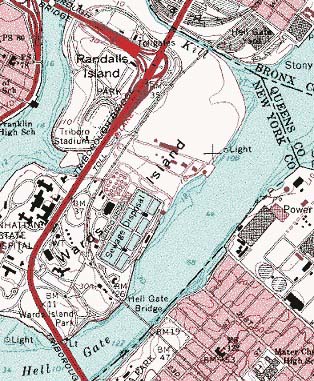
Many of the transcribed letters and documents contain intriguing details of the history of New York City. In a letter of 15 June 1811, Commodore Chauncey describes the search for the gold-laden British naval payroll vessel HMS Hussar that sunk near Hells Gate in the East River. The hunt for the sunken Hussar has continued to intrigue treasure hunters down to the present day. Commodore David Porter’s letter of 28 June 1812 provides a close examination of the conflicting emotions generated in New York City, by the War of 1812, as a mob sought to tar and feather one of his crewmen. Fire remained an ever present hazard in the early Brooklyn. For many years the navy yard remained a highly flammable mix of wooden ships and rough buildings (see 10 September 1810, 27 May 1811, the "Great Fire" of December 1835 and 18 April 1853).
Readers will find several documents relating to the now largely forgotten eleven-year tenure of Commodore Samuel Evans. Evens tenure began optimistically (see his letter of 20 July 1815) but culminated in his 1823 court martial on charges of "theft and misappropriation" and for being unable to make a clear separation between his official duties and responsibilities, and his private business and commercial affairs. I have included a small collection of documents reflecting employee and management views of the Ten Hour Day controversies (see August 26, 1835) and an account of the 1852 strike (see 16 December 1852). Together these records make known the rare victories in the long struggle of mechanics and workers for shorter work hours, decent pay, and benefits. Two employee letters addressed to Commodore Charles G. Ridgeley cover the difficult subject of civilian pay. Lastly, I have transcribed a group of newspaper articles on the launch of new naval vessels such as the USS Ohio, 30 May 1820; USS Savannah on 25 May 1842; USS Albany on 30 June 1846; USS San Jacinto on 16 April 1850 and the launch of the USS Niagara on 23 February 1856.While sadly no single volume records the history of BNY civilian workforce, these surviving letters, documents, regulations, pay rolls and articles can allow us to more closely study the economic and social relationships of a fascinating and bygone era. My goal in assembling this collection is to provide a window in which we can "see the participants of the past in a comprehensive way in the context of their own time".16 My hope is this small collection which covers the first fifty years will provide material for future historians while giving the general reader an informed glimpse of this largely unknown workplace and its unique history.17
16. Wood, Gordon, S., The Purpose of the Past Reflections on The Uses of History Penguin Press New York, 2008.
17. Bartlestone, John The Brooklyn Navy Yard Powerhouse Books: New York 2009, Berner Thomas F The Brooklyn Navy Yard Arcadia Publishing: Charlestown, 1999, and Stobo, John R. Brooklyn Navy Yard: Civil Servants Building Warships, accessed 24 December 2016.
Transcription: The majority of the letters, circulars, regulations, payrolls and station log entries collected here were transcribed either from microfilm or photographic images of the original documents in the collections of the National Archives and Records Administration. Newspaper articles were transcribed from the collection of the Library of Congress, Brooklyn Public Library and Genaelogytrails.com. In editing I have striven to adhere as closely as possible to the original in spelling, capitalization, punctuation and abbreviation (e.g. "Do" or "do" for ditto or same as above) including the retention of dashes, ampersands, and overstrikes. Where I was unable to determine what was written, I have so noted in brackets.
Document Format: Documents are arranged by date chronologically. Each document and the source is labeled in bold.
Biographical Information: Each section of the Commandant’s letters begins with biographical information regarding their naval careers and additional material on other persons and ships mentioned in the text are supplied in endnotes. All information for the dates of appointment or rank of naval and warrant officers mentioned in documents unless, otherwise stated, was taken from Officers of the Continental and U.S. Navy and Marine Corps 1775-1900, Officers of the United States Navy and Marine Corps in the War of 1812 Naval History and Heritage Command at https://www.history.navy.mil/browse-by-topic/organization-and-administration/historical-leadership/naval-officers-of-the-war-of-1812.html accessed 13 January 2017. All information regarding civilian employees was derived from the National Archives and Records Administration at Washington DC, New York City and or Genealogytrails.com.
Acknowledgements: My thanks to Mr. Kevin Riley Archives Specialist, National Archives and Records Administration, New York City and Chris Killilay Archives Specialist, National Archives and Records Administration, Washington DC, who generously gave their help and assistance in locating and giving us the opportunity to study and transcribe these unique navy yard records. My thanks also to Nancy Piper of Genealogytrails.com for her help and support. A special thanks to Charlotte Megill Hix for her kind help with the biographical information and image of John Warden Megill. My thanks to the extraordinarily kind and generous volunteers at the Concord Family History Center, Concord California. Their knowledge, resources and especially their wonderful (now rare) microfilm readers were essential to transcribing many of the documents in this collection.
Dedication: For my aunt Bette Louise Peynado Sharp (1927-2012), ever a kind soul and a true daughter of Brooklyn.
John G. M. Sharp
14 May 2019
Commodore Isaac Chauncey - Isaac Chauncey played a prominent role in the creation of the BNY. His service in Brooklyn, New York, began prior to its official designation as a shipyard. Chauncey went on to be Brooklyn’s longest serving commandant. His letters to the Secretary of the Navy provide us perhaps the fullest picture and most candid portrait by a career naval officer of the early yard. These letters deliver rich detail about the officers and employees, and the problems he encountered making the new yard a viable concern.
Isaac Chauncey was born in Black Rock, Connecticut, and was appointed a Lieutenant in the Navy from 17 September 1798. He fought with gallantry in the West Indies during the Quasi-War with France, in the Mediterranean during the First Barbary War, and commanded John Adams (1804-5), Hornet (1805-6), Washington and the Mediterranean Squadron (1815-1820). He was promoted to Captain in 1806.
Perhaps his most outstanding service was during the War of 1812 when he commanded the naval forces on Lake Ontario, conducting amphibious operations in cooperation with the Army, and containing the British fleet under the command of Sir James Yeo, stationed there. He also served twice as commandant of the New York Naval Shipyard. His last service was as a member, and for four years, President, of the Board of Navy Commissioners. Commodore Chauncey died in Washington 27 January 1840. Chauncey was known for his intelligence, and formidable reputation as strict disciplinarian and organizer who brought effective management to naval administration. Chauncey served twice as BNY Commandant 13 July 1807 to 16 May 1813, and again 21 December 1824 to 10 June 1833.
The first letter by Isaac Chauncey dates to 1806 when as senior naval officer in the New York area, he was in charge of contracting and administration prior to the establishment of the shipyard and the appointment of Lt. Thorn as Commandant. Chauncey’s early letters to Secretary of the Navy, Robert Smith, concern his efforts to build and administer contracts for Gun Boats required in the wars being fought against the Barbary States. President Thomas Jefferson believed that a suitable naval force would consist primarily of small gunboats that could defend the home waters of the United States. To create this defensive force, Jefferson ordered cutbacks in major ships and the construction of a fleet of small gunboats, most of which were built at Washington Navy Yard. Jefferson believed the proof of the effectiveness of gunboats was reflected in the defense of Tripoli. These small ships measured about fifty feet long and eighteen feet wide, with a shallow draft for use in the shoal waters of America's harbors. They were variously rigged with oars, and sails, and crewed by up to twenty men. On the plus side, if the wind failed or if they were engaged in close combat, they could be propelled by oars. Each Gun Boat carried two to three guns: 18 to 24-pound swivel-mounted guns or 32-pounders on traversing carriages. However, gunboats could weigh as much as seven thousand pounds, which meant that a shallow-drafted gunboat would not fare well in heavy seas. Even experienced sailors had trouble with these cumbersome vessels and nearly all had harrowing difficulties of steering a gunboat across the Atlantic.18 The war of 1812 made the administration rethink their maritime strategy with the result that the navy quickly returned many of these boats to the Brooklyn yard for storage.
18. Due to their awkward structure crossing the Atlantic in a Gunboat was extremely perilous Gunboat No. 7, Lieutenant Peter S. Ogilvie, sailed from Brooklyn New York May 14. Six days out she sprung her mast, returned to port, sailed again, and was never heard of afterwards. No. 8 had a stormy passage, but her commander, Lieutenant Nathaniel Harraden, reported to Commodore Preble that she behaved well and he considered her "perfectly safe to cross the Atlantic." In his letter to the Secretary of the Navy Robert Smith dated 2 April 1805 then Sailing Master Haraden thanked Smith that he was to be promoted to Lieutenant and to be given command of Gun Boat Number Eight. Haraden also provided a bit of autobiography, "I am an old seaman, myself and have experienced heavy gales in Every class of Vessels from a Cod Smak to a ship of the line. there is but one danger those Boats will be exposed to in a crossing of the Atlantic that is this scudding in heavy gales adding their great length to their easy draft will occasion their stern out of the water. This danger can be remedied by doping the Rudder" (see Sharp, Joh G Nathaniel Harraden Sailing Master http://genealogytrails.com/washdc/biographies/bio14.html accessed 4 January 2017
*
Robert Smith New York 20 May 1806
Nav Dept. Isaac ChaunceySir,
If you should determine to buy Gun Boats at New York on the plan herewith presented permit me to recommend Mr. Christian Bergh19 an eminent shipwright of this place who I have conversed with frequently on the construction of Gun Boats and who assist my ideas fully on the subject in fact I am chiefly indebted to Mr. Bergh for the little knowledge I possess in shipbuilding, he also did me the favor of drawing the draft of the Boat herewith forwarded. I think that it will be no surprise to you that Mr. Burgh was the Forman in the Yard at the time the President was built at his place –20With very great respect I have the honor to be Sir your most
obedient Servant.
Isaac Chauncey19.Christian Burgh/Bergh, born 30 April, 1763 and baptized 12 May 1763, Wettenburgh Church, Rhinebeck, New York. Burgh may have worked as a shipwright apprentice in Canada for a brief period but later moved back to New York City and worked at the Brooklyn Navy Yard. He was appointed to superintend the construction of the Frigate President. During the War of 1812 he accompanied Commodore Isaac Chauncey to the Great Lakes where with Henry Eckford he built ships for the U.S. Navy. After the war Christian Burgh established a prominent shipyard on Scamel Street became wealthy building packets for the Liverpool /London run.. Burgh;s son Henry Burgh was founder of the New York ASPCA Harpers Monthly Magazine June to November 1882 Volume LXV p 226 -228. Also see Sharp, John G., http://genealogytrails.com/ny/kings/navyyard.html accessed 4 January 2017
20. See Isaac Chauncey’s 24 February 1808 letter to the Secretary of the Navy re Christian Burgh, http://genealogytrails.com/ny/kings/navyyard.html accessed 10 November 2016
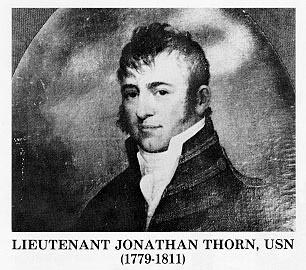
Lt. Jonathan Thorn was the first BNY commanding officer. Thorn was born on January 8, 1779, in Schenectady, New York.21 Thorn was a member of a prominent New York family. He entered the U.S. Navy on April 28, 1800, as a midshipman and during the Barbary War where he served on the frigate John Adams, followed by service aboard the USS Enterprise and USS Constitution part of a blockade off the coast of Tripoli. Under Captain Stephen Decatur,22 Thorn took part in the capture and eventual destruction of the U. S. frigate Philadelphia, an American vessel that had run aground off the coast of Tripoli and had fallen into the hands of the Tripolitans. Thorn was promoted to acting Lieutenant on November 7, 1803, and on August 3, 1804, he commanded a gunboat during the USS Constitution’s bombardment of the City of Tripoli. For his wartime actions Thorn was recognized by both Captains Decatur and Preble for bravery and meritorious service.23
21. Thorn, Charles E. Heroic life and tragic death of Lieutenant Jonathan Thorn, United States Navy. New York City, Pub, for the author and C. R. Churchill and Mrs. Ida C. Baumgartner, 1944. http://www.ussjpkennedyjr.org/thorn647/ltthornbk.html accessed 10 November 2016
22. Stephen Decatur, Jr. (January 5, 1779 , to March 22, 1820) was a United States naval officer and commodore notable for his naval victories in the Barbary Wars and the War of 1812, https://en.wikipedia.org/wiki/Stephen_Decatur accessed 24 November 2016.
23. Edward Preble (15 August 1761 to 25 August 1807) was a United States naval officer who served with great distinction during the 1st Barbary War, leading American attacks on the city of Tripoli and forming the officer corps that would later lead the U.S. Navy in the War of 1812. See also https://en.wikipedia.org/wiki/Edward_Preble
accessed 20 November 2016.On June 6, 1806, Lieutenant Thorn was appointed the first BNY commandant. At the age of 27, he was youngest officer ever to command a United States Naval Yard. His letters reflect his efforts to build, preserve and inventory Gun Boats. As a junior officer, Thorn’s position at the BNY and his independence of action were hampered by his rank and a somewhat suspicious and inflexible nature. Thorn’s tenure in Brooklyn though was brief; his few surviving letters disclose a young man plagued by doubts, suffering poor physical and possibly mental health. In July 1807 Thorn, exhausted, requested and was granted a leave of absence. In addition to his health, Thorn was probably frustrated by the lack of promotional opportunity. In the peacetime navy promotions were few and Thorn must have sensed his tenure in Brooklyn would not improve his prospects (see Secretary of the Navy Robert Smith’s letter dated 12 May 1807). When the wealthy financier John Jacob Astor offered Thorn command of a commercial expedition to the Pacific Northwest, he quickly agreed.24 In 1810, The Navy Department granted Thorn a two-year furlough to command Astor's sailing bark Tonquin in the Astor Expedition for the Pacific Fur Company to the Pacific Northwest to establish a fur trading post. The Tonquin left New York City on 8 September 1810, sailed around Cape Horn on Christmas Day, stopped off in Hawaii and arrived at the mouth of the Columbia River on 22 March 1811. On 15 June 1811, having traveled along the west side of Vancouver Island they anchored to trade with the local Nootka people. Thorn’s insulting behavior toward the Nootka chief resulted in a war party returning the next day for revenge; they attacked the ship and killed Thorn and most of his crew.25
24. Ronda, James P. Astoria and Empire University of Nebraska Press: Omaha, 1993, p. 96.
25. Stark, Peter Astoria Astor and Jefferson’s lost Pacific Empire: A Tale of Ambition and Survival on the Early American Frontier, Harper Collins: New York 2015, pp 77, 213, 290-291.
*
Lieut. Jon. Thorn Nav. Dept.
Navy Yard New York 18 June 1806I have received your letter of the 18th instant. The appropriation for the improvement of navy yard being limited, I cannot decide upon having improvements recommended by your letter until I receive an estimate of the expense.
I am respectfully your Obt Servt
R. Smith*
New York 30th June 1806
Sir,
I have at length succeeded in providing an estimate of the expense for the Improvement and preservation of the public property deposited at the navy yard Viz.
To take up the guns and place them together on skids $ 200 -
To take up the anchors and place them on skids $ 300 -
To repair the platform in the [ ] and clear of the mud, and turn the timber and place the timber $200.
To square the timber on the beach and pile it in a range within the timber shed 270 -.
To extend the timber shed 100 ft. Take up the live oak now lying in the stream and pile it a range with the timber shed $ 500 –S1200
You will observe that I have made an estimate for the putting the live oak in a state of repair.
With much respect I am Sir your Obedient Servt.
J Thorn*
Lieut. Jon. Thorn Nav Dept
Navy Yard New York 9 July 1806I received your letter of the 30th ult., containing an estimate of the expenses or the preservation and arrangement of the publick property deposited at the Nary Yard on Long Island Viz
For taking up the guns and placing them on Skids 200 –
For taking up the Anchors and laying them on Skids 60 –
For sorting the square timber on the Beach and piling it in a range with the timber shed 270 –
For extending the Timber Shed 100 feet 500 –
For taking up the live oak now in the Dam and piling it in a range with the Timber Shed 1200 –All of which is approved & you will proceed to execute the same, accordingly I have written Mr. Beekman to make timely requisition of the money. You will observe that I deem it relative to removing the live oak under cover and approve of, and not your estimate for replacing the platform.
I am Sir
R. Smith*
New York 22nd July 1806
Sir,
Conformable to your orders of the 10th instance I have yesterday commenced the separation at the Navy Yard. I observe that you was silent in your instructions regarding the latter part of my letter viz employing six laborers to do the necessary work about the yard (there in men stationed) and not enumerated in the estimate, finding their services indispensable and presuming you would not object to it I have employed them and beg you will extend my instructions to that effect –
The contract for the Gun Boats will be signed tomorrow when they will be sent you.
With much respect I am Sir your Obedient Servt.
J. Thorn
Hon. R. Smith Secretary of the Navy*
Lieut. Jon. Thorn Nav. Dept.
New York 28 July 1806I have received your letter of the 22nd instant – Your conduct in employing the six laborers for necessary work about the Yard is to be considered as a matter of course
Respectfully
R. SmithNavy Yard New York 13th August 1806
Sir,
The Gun Boats No. 6 and 8 and the bombard Vengeance have been delivered to me with their stores, having no orders how to dispose of them and not knowing for what services they may be intend, I have only hauled them into the slip and taken their provisions and stores into the public store and made arrangement with the commander at Fort Jay to receive the powder. I beg you will inform weather they are to be kept in a state for active service or laid up and also whether the officers left with them are to be supplied with a ration from the public store or find themselves for the present. I have requested them to find themselves for the present until further orders. I shall provide and take the guns out of the Gun Boats their remaining on board any time without any weight in the center will be apt to fag them - The sails belonging to no. 6 are reported to be in bad order, she awaits caulking, her false keel has never been coppered and is reported to be foul and some of her spars will require repair – Gunner Sales, her Boatswain deserted the day he was paid off and I have approved William M. Davis a man recommended by Lt. Lauce to supply the place – No.8 was left without Boatswain or Gunner, Lt. Haraden26 not having on board a man adequate appointed James [illegible] Boatswain and Charles Lindsay Gunner as your pleasure may be known – the false keel of No. 8 is likewise reported to require some repair and her decks caulked – the bottom of the Vengeance is very foul and requires [grating]
I am Sir with Greatest Respect your most Obt Servt.
J. ThornThe Honorable Robert Smith Secretary of the Navy
26. Nathaniel Haraden had long service in the US Navy, serving as Sailing Master, Lieutenant; and from April 16, 1816 Master Commandant. Haraden served the last decade of his life at the Washington Navy Yard as executive officer to Thomas Tingey. Haraden died at his house near the Yard gate on January 20, 1818. For biography see Sharp, John G, http://genealogytrails.com/washdc/biographies/bio14.html accessed 20 November 2016.
*
New York 28 Aug. 1806
I have received your letter of the 23rd inst. Allow the Boatswains and Gunners employed by you full pay which is 20 D per month and 2 rations per day.
Lieut. Jon. Thorn Nav. Dept.
New York 20 Aug. 1806Your letter of the 9 & 13 instant has been received – The Gun Boats and the Vengeance are to be kept ready to receive their crews and provisions and proceed upon active service. You will therefore carefully prepare and forward to me an Estimate of the expense of putting them in such a State. Upon receiving such an estimate I will give you further instruction upon the subject.
The officers attached to the Gun Boats and Vengeance may either be supplied by the publick, or they may supply themselves with rations – if they should prefer being supplied by the publick inform the accountant of the Navy of it, and he will forward particular instructions upon the subject of issuing the rations. If they should choose to supply themselves they will be allowed 20 cents for each ration that they are by law entitled to when I inform you that they may supply themselves with rations I do it with reservation, that they shall not by frequent absence from their respective vessels subject the publick to any inconvenience .
I am Sir Very Respectfully &c &c
R. Smith*
Lieut. Jon. Thorn Nav. Dept.
New York 28 Aug. 1806I have received your letter of the 23rd inst. Allow the Boatswains and Gunners employed by you full pay which is 20 D per month and 2 rations per day.
R Smith
*
Lieut. Jon. Thorn Nav. Dept.
New York 24 Dec 1806The Ketch & Gun Boats under your care must be immediately prepared for actual service in all respects excepting their crews- They must be put in a State of readiness to receive their crew & proceed upon service immediately upon order being given to that effect – Make you a requisition upon the Navy agent for every supply wanted & report to me daily the progress you may be making
Respectfully
R Smith*
Lieut. Jon. Thorn Nav. Dept.
New York 4 May 1807I received your letter of the 30th ult. 30 April 1807. I have never received any communication in the least degree prejudiced to your character or conduct as an officer and a gentleman; on the contrary you have always been reported to me as an officer of distinguished merit and of a gentlemanly correct deportment. Such is consequently my opinion of you that it would afford no greater pleasure to gratify your expectation relatively to the rank if it could consistently be done.
I am respectfully
R Smith*
Lieut. Jon. Thorn Nav. Dept.
New York 12 May 1807I have received your letter of the 8th instant agreeably to your request I have placed the Gun Boats under the charge of Lieut. Lawrence. After delivering them over to him, you will consider yourself at Liberty to go into the country for a few days, and then repair to the City of Washington for the purpose of settling your accounts. You state that officers of junior warrants have been placed over you and that you were under the impression that your name would stand on the list next to that of Mr. Trippe –
Upon reviewing the records I find no instance of an officer being placed over you, except the case of Mr. Morris. He entered service as a midshipman 1 July 1799, you were appointed 28 April 1800 & entered service 1 May 1800. Mr. Morris' appointment warrant was prior to yours by two years - but by mere accident he did not receive his warrant until 27 May 1800. No person would pretend to say that a casual circumstances of this kind deprive Mr. Morris what would been in effect if I had placed your name on the list next to that of Mr. Trippe. It would have been raising you over 27 gentleman whose warrants are senior to you.
I am respectfully
R Smith*
New York 9th July 1807
Sir,
By the advice of my physician I was on the seaboard when your letter of the 3rd inst. arrived so that I did not receive it until today. It is extremely painful for me to say that I am unwell to attend to orders at a time when the services of every officer are apparently so much required, that I have been confined to my room nearly the whole time since I left returned from Washington with a pain in my breast and a cough and my physician will not suffer me to walk out any more to take any exercise whatsoever, I have acquainted the commanding officer with the nature of my orders who knows my inability to render him any service in fitting out the Gun Boats or otherwise, I have however told him that I should be ready in case of emergency to assist him as far as my strength would admit – A voyage to sea has been strongly recommended by all the physicians I have consulted as the most probable remedy and I was only waiting your decision to my request when yours arrived, if an indulgence of that kind could be consistently granted it might possibly be the means of restoring while in my present weak state I could be of little or no service particularly on board a Gun Boat –
I am Sir with respect your obt Servt. J. Thorn
To: Honorable Robert Smith
Secretary of the Navy*
Lieut. Jon. Thorn Nav. Dept.
New York 13 July 1807I have received your letter of the 9th instant. As your future services which may be more important are calculated upon, you will pursue such course for the reestablishment of health as your Physician may advise. My wishes for your success [and] when again ready for service you will inform me by letter
I am respectfully
R Smith*
Navy Yard
13th July 1807Captain Issac Chauncey
You will take command of the Navy Yard of New York. You will for the present be considered as having general charge of the Yard and property therein deposited. When it can conveniently be done, you will receive all the public property at the yard from Mr. Beekman by inventory, giving to him receipt therefore.
When you shall require a clerk you may engage one at a salary not exceeding $ 600 per annum. The one at present allowed Mr. Beekman may properly answer your purpose.
I have the honor to be Sir, Your obedient Servant. R. Smith*
Robert Smith New York Navy Yard
Nav Dept 3 August 1807There is two small wooden buildings in this yard that stand very much in the way – and prevent our completing the improvements already commenced – May I have them removed to another part of the Yard. It can be done with our own people without any extra expense except in putting up the chimney again. I presume this can be done for about 10 to 12 Dollars as materials of old chimneys will answer again.
I have the honor to be very respectfully
Sir your most Obedient Servant.
Isaac Chauncey*
Robert Smith New York Navy Yard
Nav. Dept. 3 August 1807Sir
The House in the Navy Yard is not tenable for a family in its present situation and it would cost a considerable sum of money to make it so, and after all it would be money badly expended for whenever a ship is built in the Yard the House must of necessity be taken down - Lieutenant Johnson and other officers attached to the Yard at present occupy it and there is no other place in the Yard to accommodate them in - I can rent a small house a little without the Yard for about $ 200 a year
If you should approve of that I should prefer it to repairing the house in the Yard and it would cost much less besides accommodate Lieutenant Johnson and the other officers. The mill in the Yard rent for $500 a year these could be taken from that sum, a sum sufficient to pay the House rent and the surplus appropriate for the improvement of the Yard in any way that you may think proper –
I have the honor to be very respectfully
Sir your most Obedient Servant.
Isaac ChaunceyTHIRTY DOLLARS REWARD
DESERTED from the Marine Barracks at the Navy Yard New York, on the morning of the 31st ult. Michael Lochlan and Thomas Duggin, Privates in the Marine Corps.
M. Lochlan us a native of Ireland, 5 feet 5 & ½ inches high, grey eyes, dark hair and dark complexion.
Thomas Duggin is also a native of Ireland, 5 feet & ½ inches high, 28 years of age, blue eye, dark hair and fair complexion. By trade a Shomaker.
The above Deserters are supposed to be in the City of New York. Whoever will apprehend said Deserters, and deliver them to me or any officers in the service of the United States, or confine in any Gaol shall for the two receive the above reward, or 15 dollars for each.
JOHN JOHNSON
Lieutenant of Marines Commanding
Navy Yard New York
Aug. 3rd 1807Sources
Evening Post (New York, NY), p. 2Johnson, John. Second Lieutenant, 23 May, 1800. First Lieutenant, 1 June, 1802. Resigned in 1809.
U.S. Marine Corps Muster Rolls, 1798 -1958,
Roll 002, p.25, Record Group 127, NARA Washington. Privates Michael Lochlan and Thomas Duggin, USMC both deserted 1 August 1807. https://www.fold3.com/sub-image/683725008/lochlan-unknown-michael-us-marine-corps-muster-rolls-1798-1958*
Robert Smith New York Navy Yard
Nav Dept 4th August 1807Sir,
Is the armorer that Commodore Rodgers has given me orders to appoint to be considered as permanent establishment in the Yard or merely an armorer in the Navy and to be stationed in the Yard for the present – if the former what is the salary to be – A Mr. Fey has made application to be appointed and to superintend the foundry if any such establishment should be thought necessary (at the salary of $ 1200 per annum) he has at present a foundry in this city and is furnishing the arms for Gun Boats that was built that he can make Blunderbuss, muskets, pistols, cutlasses, &c &c stock and faith polish them and complete them for service If a person of his description should be thought necessary I will make a more particular inquiry respecting his ability in the line of his profession and report to you the results of such inquiry
I have the honor to be most respectfully
Sir your most obedient servant
Isaac Chauncey*
Isaac Chauncey Aug 5th, 1807
Navy Yard New York
The inconvenience attending our having no Blacksmith Shop in the Yard induces me to direct that you have a temporary one erected capable of containing three fires in such part of the Yard as we will determine on immediately.
I have the honor to be
Sir your obedient Humble Servant[Signed] John Rodgers
*
Robert Smith New York Navy Yard
Nav Dept 10th August 1807Sir
In consequence of an order of Commodore Rodgers (a copy of which I enclose) I have directed a Blacksmith Shop to be built in the Yard, for the purpose of repairing any iron work to the Gun Boats, that may be wanted as we find it extremely inconvenient to cross the River for every little piece of work that is wanted to be done in that line. It will be necessary to have a Blacksmith either on Daily Pay or as permanent establishment. I presume on daily pay will answer but at least until the Gun Boats are equipped there is a lighter and two ship boats in the Yard. Shall I have them repaired as they will be worse for watering and provisioning the Boats after they are in commission.
I have the honor to be most respectfully
Sir your most obedient servant
Isaac Chauncey*
Robert Smith New York Navy Yard
Nav Dept 12th August 1807Sir
There is wanted to superintend the duty in the Yard, an active smart midshipman, who could also do the duty of a storekeeper for the present, and ten men could be employed to advantage if they could be entered the same as the men at Washington in ordinary – That is by the month for in our present situation as I have to cross to town, several times a day I am obligated to take men from the Gun Boats to go in the Boat with me - Moreover these same men will be necessary to assist in taking the inventory of the publick property in stores. There is also wanted for the Purser & Surgeon stores two rooms to be partitioned off in one end of the warehouse shall I have it done with rough board?
I have the honor to be most respectfully
Sir your most obedient servant
Isaac Chauncey*
Robert Smith U S Navy Yard New York
Nav. Dept. Aug 27, 1807Sir,
What shall I do with the wheels and gun carriages lately condemned & belonging to the Connecticut and Rhode Island Boats they are much in the way in the Yard and cannot be converted into anything useful except fire wood unless the side pieces of the carriages may possibly answer for the same part of the smaller carriages. If you will permit me to break these up the Iron works can be wrought up in the Yard in lieu of new Iron.
I have the honor to be very respectfully
Your Obedient Servant
Isaac Chauncey*
Robert Smith U S Navy Yard New York
Navy Dept. September 1 1807Sir,
We have no places for the people attached to the yard to live in. May they be on board the Ketch Vengeance until she is wanted to return to service. Commodore Rodgers has no objection
I am sir respectfully
Your Obt Servt.
Isaac Chauncey*
Robert Smith U S Navy Yard New York
Navy Dept. November 27, 1807Sir,
The following things are almost indispensable to promote the public service and for the accommodation of the yard. Two wells to be sunk in the yard with pumps in them, windows in the armory, a horse & cart to transport stores, fill holes about the wharf &c &c The tide ebbs & flows in 24 hours consequently leaving a dampness that must destroy the timber next to the ground very soon There is sufficient for the horse in the yard Six wheel barrows with more other little conveniences which I will hope you will leave to my discretion I will not abuse your confidence
Very respectfully
Isaac Chauncey*
Robert Smith U S Navy Yard New York
Nav Dept Dec 9 1807Sir,
I have three men in confinement deserters from the flotilla; how shall I dispose of them? This crime happens so frequently; and in consequence so ruinous to the service that unless a severe example is made of some offender we shall never be able to put a stop to it.
I have the honor to be Your Obt Servt
Isaac Chauncey*
Robert Smith. U S Navy Yard, New York
Nav. Dept. Dec 10, 1807Sir,
As we shall be under the necessity of employing a number of laborers when the Constitution is repairing, shall enter some more men by the month for the yard; they can be entered for one, two, three or four months at ten dollars per month if victualed from the yard and at sixteen dollars if they find themselves; this would be a savings to the US of nearly one half as the price of a laborer is from one dollar to one dollar and a quarter per day. The Gunboats have all returned to the Yard in good order except No 56 which received some damage in her bottom in consequence of getting on the rocks near Staten Island but will be repaired and the Boat ready for service in the course of this day or tomorrow.
I have the honor to be
Your Obt Servt
Isaac Chauncey*
Robert Smith US Navy Yard New York
Navy Dept. 5 Jan 1808Sir,
I yesterday reduced the wages of the carpenters employed on the Constitution & Revenge 25 cents per day.27 Some of them (in consequence of Mr. Buckland having mentioned publicly that twenty three gun boats was to be built) immediately had an idea that we could not do without them and would not go to work. I however was able to find a sufficient number willing to work at the reduced wages and these who refused will in a week come back and beg for work and I shall be able to reduce their wages 25 cents more, for the merchants have no work for them to do therefore they must either work for us at our price or go unemployed to induce the merchants to believe the government is not fully determined to build the twenty three Gun Boats at this place I have given out that they are to be built where they can be built cheapest and if their estimates are above what they ought to be that I shall take the timber in the Navy Yard to use for repairs and the Gun Boats be built in some other part of our union –
This I think will induce them to make a fair estimate and if I am not mistaken much less then former.
I am sir respectfully
Your Obt Servt.
Isaac Chauncey27. The Navy purchased the Baltimore-built schooner Ranger at New Orleans in December 1806. She was renamed and commissioned as Revenge. In 1807 she was ordered to the Atlantic coast under the command of Lt. Jacob Jones, joining Commodore John Rodgers' New York Flotilla, which assembled shortly after the Cheaspeake-Leopard Affair r to protect shipping in the vicinity of the Hampton Roads. With the passage of Thomas Jefferson's Embargo on 22 December 1807, the flotilla established a blockade of the US coast to prevent foreign commerce. In 1809, Lt. Oliver Hazard Perry relieved Jones in command of Revenge. The passage of the Non-Intercourse Act on 1 March 1809 had removed most restrictions on foreign commerce (excepting France and Britain which were at war with each other), and the ship widened her area of operation, cruising south to the tip of Florida and north to the coast of New England. In April 1810, the schooner entered the Washington Navy Yard for repairs. The following July, while cruising off Charleston, South Carolina, Revenge was ordered to Amelia Island, Florida, then Spanish territory, to free an American ship, Diana, which had been seized in Spanish waters and placed under British colors. Undaunted by the presence of two British warships, Perry boarded the ship, manned her with a prize crew, and sailed away. That winter, Revenge was charting coastal waters and harbors near Newport, Rhode Island, New London, Connecticut and Gardners Bay, Long Island, New York. On 9 January 1811 she ran aground on a reef off of Watch Hill, Rhode Island, while attempting to navigate a hazardous stretch of water known as 'The Race' in heavy fog. Cargo was unloaded onto other ships, and Revenge was pulled off the rocks. However the tow rope parted and she began to drift, foundering, and eventually sank. The records maintained by the Department of the Navy consider her to have been abandoned. Perry was cleared of responsibility for loss of the ship during the consequent court-martial proceedings. The court held the ship's pilot responsible for the wreck, as he had assured Perry of his ability to navigate Block Island Sound
Unemployed Seamen Petition the city New York and the Navy Yard for Bread and Shelter January 1808,
Note: The Non-Importation Act, passed by the United States Congress on April 18, 1806, forbid any kind of import of certain British goods in an attempt to coerce Britain to suspend its interference with American merchant shipping.
The Embargo Act, in December 1807 President Jefferson asked the Congress to pass a total embargo on vessels leaving American ports and the bill was signed into law on 22 December 1807. The Embargo Act has been described as “a colossal blunder… in a single stroke, moreover it brought a decade of American economic prosperity to a dead stop. Exports tumbled 80% and imports 60 %.
In port cities like New York no one suffered more than the sailors. According to English visitor John Lambert there were about 500 vessels in the harbor which were lying useless and rotting for want of employment. On 9 January 1808 unemployed sailors rallied in the park, then paraded through the streets with signs demanding bread or work. In response, the city Common Council organized relief operations including a soup kitchen with the almshouse supplying food to over a thousand persons a week. The city also organized the nation’s first work relief projects for persons who are capable of laboring and who are destitute of occupation. The Common Council also devised a plan for the Brooklyn Navy Yard to hire unemployed sailors. Many of the tars feared being “trepanned” - kidnapped by the navy, and only fifty-three accepted the offer.
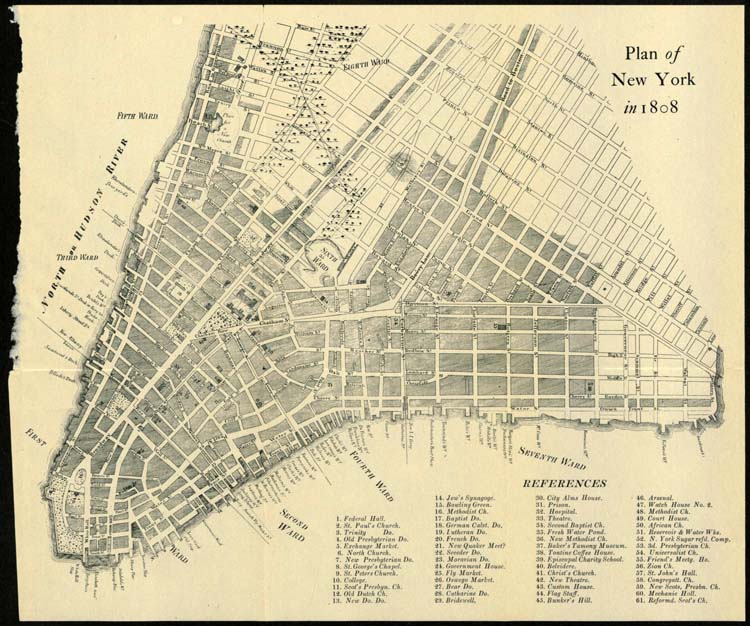
1808 Plan of New York, Center for Brooklyn History, New York Public Library
THE COMMITTEE OF SEAMEN
Appointed to wait on the Mayor and Council for the purpose of making some provision for the unemployed seamen of New York, received the following answer:
The committee appointed by the common council to provide for the support of Seamen out of employment have adopted the following plan:
They have agreed with captain Chauncey of the United States Navy Yard to receive such seamen at the yard on conditions of their signing articles to continue service during their own pleasure and perform duty subject to his orders, the Common Council defraying the expenses of their maintenance which is to include victuals, drink, fuel, candles and accommodations for lodging.
By the Committee
JOHN BINGHAM, Chairman
Committee of ways and means, Jan 12, 1808
N.B. As some may have apprehension of being trepanned, the Hon. Council pledge their honor to provide nothing of this nature should take place.
W. PINKNEY
W. DYCKMAN Committee of Seamen
W TRUEMANand J. CAMPSources:
Public Advertiser (New York, NY), 13 January 1808, p. 2
Burrows, Edwin G. and Wallace, Mike Gotham A History of New York City to 1898 Oxford University Press: New York, 1999, pp.411- 414
Lambert, John, Travels Through Canada, And the United States of North America, In the Years 1806, 1807, & 1808: to Which Are Added Biographical Notices and Anecdotes of Some of the Leading Characters in the United States. 2d. ed., cor. and improved. (London: Printed for C. Cradock and W. Joy, 1814) pp. 291-294.
Robert Smith US Navy Yard New York
Nav Dept January 11, 1808Sir,
A committee of the Carpenters called on me yesterday to know whether I could employ any number of seamen that might apply to them for support I agreed to receive as many as 300 provided, the sailors will sign Articles subjecting themselves to Naval Discipline and holding themselves accountable to the Navy Department for the amount of their rations at the rate of 20 cents per day I hope this arrangement will meet your approbation as we shall have the services of these people without any expense not even their victuals.
I am sir respectfully
Your Obt Servt
Isaac Chauncey
*
Commodore Isaac Chauncey 24 February 1808
response to the Secretary of the Navy
re a petition of Brooklyn Navy
Yard workers
Source: Letters sent by the Secretary of the Navy to Commandants and Navy Agents M441/1 microfilm rolls 1 and 2.at the National Archives and Records Administration, Washington, D.C. Records of the New York City Navy Yard, RG 45.
Note: This letter is dated 24 February 1808 from Commodore Isaac Chauncey, Commandant New York Navy Yard (Brooklyn Navy Yard) to the Acting Secretary of the Navy Charles W. Goldsborough. Chauncey was writing in response to a petition of shipyard workers requesting the removal of Christian Burgh, Master Shipwright and entrepreneur. In 1808 BNY was not particularly active and was building mostly gunboats but these jobs were relatively well paid and highly prized. The high pay resulted from the prolonged shipwright apprenticeship and that shipbuilding in New York City was still in its infancy with only 117 shipwrights and caulkers in whole town.28 This letter is an excellent source for extremely contentious question of citizenship for naval shipyard employees. This issue was finally resolved in the affirmative by the Board of Naval Commissioners circular dated 11 April 1817.
28. Burrows, Edwin G. and Wallace, Mike Gotham A History of New York City to 1898 Oxford University Press: New York, 1999, p. 341.
Also see John Stobo An Introduction to the Labor History of Navy Yards http://www.columbia.edu/~jrs9/Navy-Yard-views.htmlNavy Yard New York 24th February 1808
My Dear Sir,
I again thank you for your letter of the 4th inst., as it enables Merit to establish its innocence against the aspersions of foulmouthed calumny.
Mr. Christian Burgh (the subject of the Petition sent to the Honorable Secretary) was born in this state of course a Citizen.29 It is true that he went to Nova Scotia with his Father while a minor and of necessity obliged to follow the fortunes of his family but soon after he became of age, he returned to his native state and resided in this city for the last 12 years two of which he has been personally known to me, he was Forman in the Navy Yard at the time the Frigate President was built and gave perfect satisfaction - For his talents and requisite merits as a mechanic, his integrity as a man there not his superior in the United States which I believe his merit will allow and for which I will pledge my reputation. I will appeal to the order of Dr. Mitchell to the truth of this statement. It is a fact that Mr. B. refused to take the oath of allegiance (as stated by Mr. Jacob Merrell. Note why he refused because he considered himself insulted for he went to the Poles as a native American citizen to vote. He was challenged by a person of opposite politicks this appeared so pointed that Mr. Burgh to take the oath not that he had any other objection merely not to gratify the challenge he however went to the to Ward to the Mayor of the City and took the oath of allegiance and abjuration.
29. Christian Burgh/Bergh, born 30 April 1763 and baptized 12 May 1763, Wettenburgh Church, Rhinebeck, New York . Burgh may have worked as a shipwright apprentice in Canada for a brief period but later moved back to New York City and worked at the Brooklyn Navy Yard. He was appointed to superintend the construction of the Frigate President. During the War of 1812 accompanied Commodore Isaac Chauncey to the Great Lakes where with Henry Eckford he built ships for the U.S. Navy. After the war Christian Burgh established a prominent shipyard on Scamel Street and became wealthy building packets for the Liverpool /London run.. Burgh"s son Henry Burgh was founder of the New York ASPCA Harpers Monthly Magazine June to November 1882 Volume LXV p 226 -228.
Mr. Burgh was employed (from my recommendation) by Mr. Beakman in 1806 to build a few of G. Boats built at that time and I believe if you will refer to the estimates then sent forward you will note that he was the lowest. He also was one of the gentleman that Mr. Beakman purchased timber from in August for the building of G. Boats He has since been contracted with to build five Gun Boats of the twenty-thee ordered to be built here when I received orders to repair the Constitution I employed Mr. Burgh in conjunction with Messieurs Eckford & Bebee (Republicans) to repair that ship it is my opinion the people best qualified for such a service It is true that I employed Mr. Burgh knowing him to be a Federalist but I did not employ him for his politicks but for his intrinsic value as a workmen and as a man It may be necessary for me to state here which I do most solemnly upon the standards & honor of a gentleman that I never since I have been in publick service employed a man for his political sentiments or have been in any way influenced by them I have always employed those people whom I thought would do the government the most Justice and do the work on the best terms always keeping in view economy and always have endeavored to impress upon the minds of all those whom I have had authority to employ the necessity of their doing the publick work on as good terms then they do for individuals for in one case there would be some risk in the other nine.
The whole of the persecution against Mr. Burgh has come from my reducing the Carpenters wages and time of some worthless fellows out of this Yard which they then conceived was owing to influence of Mr. Burgh which is not [illegible] is most scandalous The petitioners have asserted that they are all American citizens this is not the fact for some of them are not only British subjects born but not citizens by adoption - another strange position has been taken by the petitioners that by employing foreigners or enemies to the country to do the publick work (I presume Mr. Burgh) that it would be so executed as to make the ship not only useless but dangerous to the officers and [men] this is a strange & foolish doctrine unless they will consent became rascals themselves for the most of them petitioners in the carpenters petition (that is worth employing) are at this time and have from the commencement employed on the constitution. Therefore if the work is done badly it is their fault not Mr. Burgh’s who merely [imparted ?]in conjunction with another Master Ship Builder (and a Republican) the fact is they are dissatisfied that their wage was reduced and have attacked Mr. Burgh deeming that would be of sufficient measure with a certain class for the purpose of making their attack on me with more success for they continue in [illegible] him their next object would be to me also - But I trust that no government and particularly administration is entrusted as the present would not remand any of its servants for doing their duty –
I enclose a number of documents shewing that Mr. Burgh is a native born citizen of the U. States and a respected mechanic of this city I also enclose you a paper shewing the occupation and characters of most the signers of the petitions by which you may make a comparison between Mr. B – and his persecutors and draw your own conclusions - the City petition is headed with a few respectable names, but for what reason these gentlemen put their [name] to that petition is I think very evident they would sign a counter one if they could gain a Vote by it.
The petition itself was wrote by a man that makes a trade of criticism and would prostitute his pen in any cause that he could gain any thing by it he would write me a petition tomorrow on any subject for five dollars. The contractors for the building of the Gun Boats gave me in their estimates together of course there is no difference in them. The contractors I believe are all republicans except Mr. Burgh - I however forward to you two original ship chandlers bill, you will be pleased to compare them – Mr. [illegible] who was employed before I came to the Yard wished to furnish the proposal from mere patriotism but Messrs. Lehermerhorns wanted a moderate profit on their goods - I will prove whenever necessary by the Certificate and oath of most of the officers in the yard and Squadron that the [illegeable] and other articles furnished by Messrs. Lehermerhorn is at least 15% better than that received from Mr. Dickerson with all his patriotism and you will perceive by the bills considerably cheaper –
I regret that I could not forward these papers before but I was anxious to obtain a correct statement of the facts relative to Mr. Burgh and also the Characters of his prosecutors I have taken much pains to obtain those and their characters those left blank I could not obtain to my satisfaction but the others you may rely upon the correctness of –With great esteem and personal regard I am your friend
[Signed] Isaac Chauncey[Addressed to:] Charles Goldsborough Esq Washington
*
A List of Subscribers to the Citizens petition to the Honorable the Secretary of the Navy
Name, Occupation & Remarks
Dewitt Clinton, Mayor Jrail Titus, Grocer John L. Broome, Merchant Rufus Paggar, House Carpenter Abr. Bloodford, Asst. Alderman Cornelius Sebring George Mitchell, Grocer & Grog Shop Keeper, Brother to the Hon. Dr. Mitchell Rich Milivar Aspinwall Cornwallis, Grocer & Grog Shop Keeper, Brother in law to the Hon. Do. Micah Hawkins Daniel Winship, Butcher Nath Smith Josiah Ferris Phineas Lockwood, Joiner, A worthless Drunkard Leonard Seaman, Auctioneer Abraham Knopp, House Carpenter John Broome, Lt. Governor Phineas Hulese John Pell, Butcher P. J. Goodfellow John A. Smith, Clerk to Lumber Merchant Thurston Wood, Auctioneer Matthew Bir, Assist Alderman & cabinet maker John Grey Stephen Ludlum, Assist Alderman & cabinet maker Banney Radley David Covert, House Carpenter James Greaton, Taylor R. Delaplaine, Porter House Keeper Reuben Brooks, House Carpenter, Discharged in consequence of his exorbitant charges David Hubbard, Inspector of Beef & Pork Rodman Boone [Illegible] Guest Isaac Dereiner, Cartman Fisher Dunham, Grog Shop Keeper, Brother to the Hon Dr. Mitchell Charles Dobbs, Cartman James Mitchell Adah Holmes, Grocer Timothy Titus, Boarding House Keeper A. Welmore, Grocer John Polhanus, Grocer David Reeve, Grocer Joseph Titus, House Carpenter [Illegible] Newby Junior Bryan Titus John Smith Alfred Titus, School Teacher R. R. Owen Jonathan Titus, Ferryman A list of Subscribers to the Carpenters Petition to the Honorable the Secretary of the Navy
Jeremiah Dodge Junior, Carver, Good for Nothing John Griffits, A boy Carpenter, Foreigner tolerable Nathan Osborne, Carpenter James Weed, Carpenter, Good John Dodge, Carpenter, Good Workman James Seaman, Carpenter, A Poor Workman David Roberts, Carpenter, Good Workman James Evans Homer Pease, Carpenter, Quit on account of wages Edmund Conely, Caulker, A poor workman Jonas Baldwin, Carpenter, An Indifferent Workman John Owens, Laborer, A Foreigner Edward Chamberlin, Carpenter, An Indifferent Workman Paul Snow, Caulker, A good Workman Nathan Known, Carpenter, A bad workman & bad character Richard Fernat, Carpenter, Good, quit on account of wages John Sviffer, Carpenter, At present an oysterman Henry Buck, Carpenter, Indifferent Dennis Munger, Carpenter, An indigent workman Gilbert Hathaway, Carpenter, Good, quit on account of wages [Illegible] Snow, Caulker, A tolerable yard workman Ebenezer Clark, Carpenter, Indifferent Edward Middleton, Carpenter, A tolerable yard workman Robert Martin, Caulker, A foreigner & a poor character Jacob Southward, Caulker, A good Workman but a worthless character Selleck Howe, Carpenter, Good Hubard Reiner Henry How, Carpenter, Good Thomas Hall, Oysterman, A foreigner & worthless character Thomas Clark, Carpenter, Good Nathan Gadney, Carpenter, Good - Quit on account of wages Stephen Cavanah, Caulker, A foreigner & indifferent worker Stephen Mott, Caulker & Oakum Spinner, But tolerable Moses Fargo, A boy Jacob Johnson Cornelius Johnson, Oysterman, A poor character John Campbell Jarvis King Andrew Parker *
Isaac Chauncey Nav. Dep.
Navy Yard New York 29 February 1808My letter of the 18th inst., directed you to discharge all foreigners &c to prevent any misunderstanding upon this subject I deem it proper to state to you that these directions were intended to include the able seaman, ordinary seaman & Boys that is such foreigners as might be serving in these capacities
Respectfully
R Smith*
Isaac Chauncey Nav. Dep.
Navy Yard New York 13 April 1808I have this day written for the Navy agent, directing him to consult with you and contract for a building of a Frame House the plan of which are accompanied in your letter of the 28th January last, all the materials in Yard that are unfit for Navy purposes and that can be applied to the building of this House, must be used in that way. Economy in the expenditure of publick monies is known to you to be essential, it is particularly so in expanding monies appropriated for the Navy Yard, because the appropriation for that object are always extremely limited. Let the House therefore be well built, but as small an expense as possible.30
Respectfully
R Smith30. The house referred to by the Secretary is likely BNY Quarters A. (See Grey Chistopher, A Federal-Style Gem That Outshines Gracie Mansion New York Times 25 June 2006 http://www.nytimes.com/2006/06/25/realestate/25scap.html
*
Secretary of the Navy US Navy Yard New York
Robert Smith June 15th 1808
Sir,
We now have about forty officers and men attached to the yard and it is probable that we shall have a number of men sent here. Carpenters to be victualed for their labor & a keeper of the accounts Request a purser of the Navy Yard solely
I am sir respectfully
Your Obt Servt.
Isaac Chauncey
*
Isaac Chauncey Nav. Dep.
Navy Yard New York 5 July 1808Sir,
Your letter accompanied by a draft of the Yard at New York had been received. You suggest a wish to have permission to point out the sites of future improvements in the Yard. This information I shall be glad to receive, and Mr. Latrobe who will in 1 day or two be on his way to New York and who takes with him a draft sent by you, being professionally a civil engineer & engaged by the Dept., will aid you in making this communication
I am Sir Respectfully
R Smith
*
Robert Smith US Navy Yard New York
Nav Dept October 10th 1808Sir,
Lieutenant Thorn has requested to be stationed at the Navy Yard at New York if you should deem it for the good of the service. If you should station Lieut. Thorn at this yard, he could be usefully employed –
I have the honor to be your
Your Obt Servt.
Isaac Chauncey
*
Isaac Chauncey Navy Dept
Navy Yard New York 29 Nov 1808Sir You will appoint a suitable character to fill the place of the Carpenter of the Yard Gobby, and when you shall be satisfied of his capability inform me, and I will send a warrant for him
I am Sir Respectfully
R Smith
*
Isaac Chauncey Navy Dept.
Navy Yard New York 12 Jan 1809Being solely responsible to this Dept for the good order of the Navy Yard under your command, and for the preservation of the property there on deposited, you will of course exclude from the Yard all disorderly persons whose presence might in any degree tend to injury of the property or subordination of the Yard you will as may be proper permit the officers attached to the Yard to occupy the houses now in the Yard.
Respectfully
R Smith
*
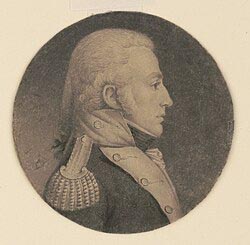
Carmick, Daniel. Captain, 3 August, 1798. Major, 7 March, 1809. Died in 1816.
Major Daniel Carmick USMC 1773-1816
U.S. Navy Yard New York 24th March 1809Sir
In a letter from the Navy Department of the 12th January last, I am authorized to exclude from the Yard all disorderly persons &c &c There is at the moment in this Yard, and attached to the Marine guard here a number of women with their children (6 to 8) who I conceive fall under the application of disorderly for they are frequently in a state of intoxication , where they make us of language, shocking to hear in a woman and behave so indecently that I should be sorry that my wife and children should be obligated to witness such abandoned conduct which must be the case if they are permitted to remain - I mentioned the circumstances to Major [Daniel] Carmick (who commands the marines in this station) and that I wished to rid this yard of most of these women and children by the 20th of April as I expected to bring family in the Yard about that time. Major Carmick observed that one woman to every 16 men was allowed by law and that Sergeants were generally allowed their wife, of this number, it was not in the power of the Secretary to deprive them. I therefore declined giving an order on the subject until I heard from you on the subject not wishing to place myself in a former situation that is giving an order and finding it disregarded with impunity. I beg not to be understood as writing to deprive marine officers of any decent woman, that they might wish for their convenience but only to have it in my power to exclude from the Yard them of abandoned characters who have neither decency or morals and who do an especial injury to the Public Service by smuggling liquors into this Yard for the men. Your early attention to this subject will much oblige me.
I have the honor to be very respectfully Sir Your Obedient Servant
Isaac Chauncey
Charles W. Goldsborough Esq
Acting Secretary of the Navy WashingtonSource: Letters from Captains, compiled 1805-1885, Volume 14, Date Range 1 Jan 1809 to 31 Mar 1809, Letter 147, Record Group 260, NARA Washington D C
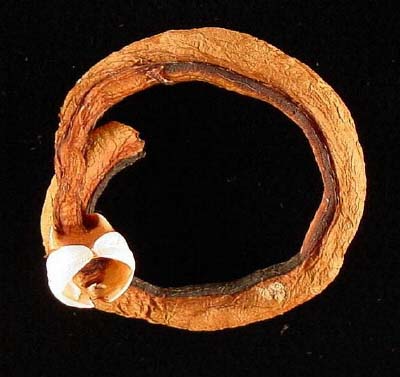
ShipwormNote: In his letter of 16 July 1809 Commodore Chauncey alerted the Secretary of the Navy, to the precautions he was taking to avoid shipworms damaging the wooden hulls of the gunboats then in the Brooklyn Navy Yard. Shipworms, also called teredo worms or simply teredo (from Ancient Greek τερηδών (terēd n) 'wood-worm', via Latin terēdō), are notorious for boring into (and commonly eventually destroying) wood that is immersed in seawater, including such structures as wooden piers, docks, and ships; they drill passages by means of a pair of very small shells ("valves") borne at one end, with which they rasp their way through. Removed from its burrow, the fully grown teredo ranges from several centimeters to about a meter in length, depending on the species. An average adult shipworm measures 10 to 15 centimetres (4 to 6 in) in length and less than 6 mm (1∕4 in) in diameter, but some species grow to considerable size. * They are sometimes called "termites of the sea". “Even today these marine borers are wreaking havoc on older wooden piers, wharves and bridges all along the New York City’s 520 miles of waterfront.” **
U S Navy Yard, N. York
16 July 1809Sir,
The season has nearly arrived when the worms at this place bite very severely. It will therefore be necessary, for the preservation of the Gun Boats bottoms, either to grave them, remove to fresh water, or haul them onshore on the Mill Dams the latter mode will be attended with the least expense –
I should also recommend that the Boats be covered with refuse boards to protect them from the weather – the expenses for conveying each Boat will be about 30 Dollars – I should feel obliged for your instructions on this subject as early as convenient.
I have the honor to be very respectfully Sir Your Obedient Servant
Isaac Chauncey
Addressed to
Honorable Paul Hamilton
Secretary of the Navy WashingtonSources: Letters from Captains, compiled 1805-1885, Volume 16, Date Range 1 July 1809 to 30 Sept 1809, Letter 36, Letter 36,
Record Group 260, NARA Washington D C*Garcia, Sierra How Termites of the Sea” Have Shaped Maritime Technology JSTOR Daily, Dec. 2021. https://daily.jstor.org/how-termites-of-the-sea-have-shaped-maritime-technology/
** Ho, Winnie, The Critters Doing $ 114 Million in Damages to the Brooklyn Pier, New York Times, 16 Sept 2021
U.S. Navy Yard New York 20th July 1809
Sir,
On the Night of the 18th June 1809, Mr. Samuel master’s mate. Mr. Samuel Wares a masters mate took George W. Simmons an ordinary seaman belonging to the Gun Boats in ordinary over to town to show Mr. Wares where a Deserter from the Navy was secreted which he (Simmons) pretended to have information of. Simmons took Mr. Wares up several narrow streets and alleys at length turning suddenly upon him, he knocked him down drew a knife and attempted to stab Mr. Wares but in which attempt after (cutting) him slightly the knife broke, he then robbed him of his watch and money and made off. –
I last night sent several officers and trusty men to watch his haunts and they succeeded in taking him and recovered the watch and the money - he is so hardened a villain that he says he glories in what he has done but regrets that he did not succeed in killing Mr. Wares.
I have to request your instructions case whether Simmons is to be tried by a Court Martial or delivered to the Civil Authority of the district where he committed the robbery – If he is to be tried by a court-martial will you have the goodness to order one.
I have the honor to be very respectfully
Sir Your Obedient Servant
Isaac Chauncey
Addressed to
Honorable Paul Hamilton
Secretary of the Navy Washington
Source: Letters from Captains, compiled 1805 to 1885, Volume 16, Date Range 1 July 1809 to 30 Sept 1809
Letter 36, Record Group 260, NARA Washington D C
*
Capt. Isaac Chauncey Navy Depart.
New York 29 Aug 1809Your letter of the 25th inst. has been received. It presents for consideration, a subject of considerable delicacy whether a deserter from the Service can after the expiration of the period for which he entered the Service, be tried for an offense committed in the public Service as well as to the individual and one which ought not be decided without the most serious consideration & upon whether if doubt exist the decision might be in favor of the individual. It is a new case, hence the propriety of a thorough examination of the Subject before a precedent is formed.
The Attorney General of the United States is not on the spot & is moreover unwell otherwise I should consult him.Under these circumstances you will consult the district attorney whom you may probably assist in forming an opinion & act according to his advice in the case of James Lee - If he should think that James Lee can under the Law be tried for the offense committed by him in March 1805 you will order a Court Martial upon him otherwise must be discharged.
I believe that 10 Dollars is the usual reward for apprehending deserters such reward to be charged to the deserter,
Charles W. Goldborough
for Paul HamiltonSource: U.S. Miscellaneous Records of the Navy Department 1776 to 1930
Charles Goldsborough to Isaac Chauncey dated 27 Aug 1809, Page 51, Letters, Roll 0175,
Record Group 45, NARA Washington D.C.
*
October 8th 1809
Proceeding of a Court Martial held onboard the U.S. Brig Syren by order of Commodore John Rodgers for the trial of James Lee, Seaman who deserted the U.S. Frigate John Adams while commanded by Capt. Isaac Chauncey.
Members Present
Capt. Charles Gordon - President
Lt. Theodore Hunt - Member
Lt. Charles Ludlow - Member
Lt. Oliver H. Perry - Member
Lt. Samuel Angus - Member
Robert G. Ludlow Judge AdvocateThe Prisoner James Lee, being brought into the Court was asked whether he had objections to any member of this Court
He answered not any -
The charges being read to the prisoner by the Court by the Court – Do You plead guilty or not guilty?
Answer - Guilty
The question was then asked have you anything to offer in your defense?
Answer - I received a liberty ticket from Lieutenant Lawrence to be absent three days - During which time I was Drunk and shipped onboard of a Brig to Havana. I was on board the John Adams 18 months. I was shipped for two years. 7 weeks & 4 days since I was taken up by Capt. Chauncey & have been in close confinement & Double Ironed since that time –
The Court being cleared & after mature deliberations do sentence the said James Lee to be mulcted of all the pay due him & to serve the residue of his time and Six months of which time he is to be chained to a cannon ball at any public works and kept at such work as the commander in chief may direct
Charles Gordon -
Theodore Hunt
Charles Ludlow
Oliver H. Perry
Samuel Angus
Robert C. Ludlow, acting Judge AdvocateSource: Court Martial of James Lee, Seaman, Date: Oct. 8 1810, Volume 2, Case Range 30 to 74
Year Range Aug 16, 1805 to Jan 16, 1810, Case number 68, Record Group 125
NARA Washington D.C.
Capt. Isaac Chauncey Navy Department
New York 16 Oct. 1809I have received your letter of the 11th inst. James Lee may be permitted to enter to serve on board a frigate for two years and that part of the sentence against him which subjects him to be chained to a Shot for six month is not to be executed.
Charles W, Goldsborough
for Paul HamiltonSource: U.S. Miscellaneous Records of the Navy Department 1776 -1930, Charles W. Goldsborough to Isaac Chauncey dated 16 Oct 1809, Page 57, Letters, Roll 0175, Record Group 45, NARA Washington D.C.
*
Isaac Chauncey Navy Dept.
Navy Yard New York 27 March 1809I have received your letter of the 24th inst. By the letter of 12 Jan last, you are invested with the authority to exclude from the Yard under your care, all such persons as you may find disorderly. Your authority in this part is perfect it was given to you from a persuasion that you would exercise it with a sound discretion with a single view to the public good. The marines while station in the Yard must have their rights, but the women allowed them must be orderly women.
Respectfully
R Smith
*
U.S. Navy Yard N York
20th July 1809Sir,
On the Night of the 18th June, Mr. Samuel masters mate took George W. Simmons an ordinary seaman belonging to the Gun Boats in ordinary over to town to show him Mr. Wares where a Deserter from the Navy was secreted which he (Simmons) pretended to have information of Simmons took Mr. Wares up several narrow streets and alleys at length turning suddenly upon him he knocked him down drew a knife and attempted to stab Mr. Wares but in which attempt after hurting him slightly the knife broke he then robbed him of his watch and money and made off. I last night sent several officers and trusty men to watch his haunt and they succeeded in taking him and recovered the watch and the money. He is so hardened a villain that he says he glorys in what he has done but regrets that he did not succeed in killing Mr. Wares -
I have to request your instructions in this case whether Simmons is to be tried by a Court Martial or whether he is to be delivered to the Civil Authority of the District where he committed the robbery – If he is to tried by a Court Martial will you have the goodness to order one –
I have the honor to be very respectfully Sir your obedient Humble Servant
Isaac Chauncey[Address to] Honorable Paul Hamilton Secretary of the Navy Washington DC
*
Paul Hamilton US Navy Yard New York
Navy Dept. 12 Oct 1809Sir,
I sometime since appointed a Mr. John Floyd to act as Carpenter of this Yard, but as I can only authorize to allow him the same pay as carpenter in the navy (say $20 per month) I cannot expect that he will continue long in this Yard unless he should be allowed some increase of pay or some equivalent for house rent. I can apprise you Sir that Mr. Floyd would be a real loss to the establishment he is a man in every way qualified and vastly superior to any other that would accept situation. I should be safe in pledging myself for Mr. Floyd‘s capability, integrity and zeal for publick service more is unnecessary for me to say.31
I have the honor to be your
Your Obt Servt.
Isaac Chauncey31. John Floyd, Naval Constructor is listed Spooners Directory of New York 1823 (see
http://bklyn-genealogy-info.stevemorse.org/Directory/1823.Bklyn.Directory.html accessed 4 January 2017) Floyd became the first Naval Constructor, he built the first shiphouse in 1824 (see New York Times, 21 October 1893, p5).*
Paul Hamilton US Navy Yard New York
Navy Dept. 30 March 1810
Sir,
There is wanted for the Navy Yard at New York a person who shall do the duty of the Clerk of the Yard keep the Boatswains account and assist the Navy Storekeeper also a porter for the office of the Commandant of the Yard.
I think that the publick service would be promoted by allowing me occasionally to employ in the Yard a Boat builder and Block maker of the Squadron at that Station
I have the honor to be your
Your Obt Servt.
Isaac Chauncey*
Paul Hamilton US Navy Yard New York
Navy Dept. 30 March 1810Sir,
In consequence of the extract of a letter from the Navy department sent to me by Doctor Bullas I have discharged all the sailmakers and blacksmiths, the circumstances I regect as much as has prevented me from completing the Revenge sails which should have been handled in four days more in other respects she is ready to receive. She is ready to receive her guns.
I am Sir respectfully
Your Obt Servt.
Isaac Chauncey*
Paul Hamilton US Navy Yard New York
Navy Dept. 31 March 1810Sir,
I leave in the Steam Boat for Albany in order to completer the business and obtain the deed of the flat. I have in this Yard one Cooper at $10 per month, one joiner and one ship carpenter rated as carpenter’s mates at $ 18 per month and five ship carpenters and caulkers rated as seamen at $12 per month. The Cooper furnished all the buckets, lids, & cans for the Squadron on this station for the last 2½ years besides having 1100 of these articles. These people are paid from the appropriation for repairs I wish to know whether they may be discharged.
I am Sir respectfully
Your Obt Servt.
Isaac Chauncey*
Paul Hamilton US Navy Yard New York
Secretary of the Navy 4th Sept 1810Sir,
My object in making this communication is, in the first instance, a conviction that it is my duty to do so, and next opt ask permission to fix the boundary and then to build a bulkhead with logs and stones which will not only be a permanent boundary for the United States but will prevent the panel which I think of necessity for being filled up by the work of the Hills. I have made calculations of the cost contemplated.
I am Sir respectfully
Your Obt Servt.
Isaac ChaunceyNote: "Capt. Chauncey will fix the boundary to his best judgement"
[Signed] P Hamilton*
Paul Hamilton US Navy Yard New York
Secretary of the Navy September 10, 1810Sir,
I am very sorry to inform you at about 12 last night the old Building that was occupied by Lieut. Gamble of the Marines was discovered to be on fire and that in the course of 30 minutes it was burnt to the ground not withstanding every exertion to save it. We however succeeded in preventing the fire communicating to any other buildings. The one that was burnt was of little or no value it being 30 years old. But I am sorry to state the Marine Clothing was consumed from the information I collected the fire was communicated from a Candle set in the windows of the upper story by Lieut. Bennett’s servant who fell asleep and left it burning & who must have perished in the flames but for the accidental circumstances of Lieut. Bennett’s discovering the fire in time to awake his servant & themselves and in a most astonishing manner to every part of the house.32 I have confined the man by whose neglect this accident happened and shall await your orders upon the subject. The standing orders of this Yard is all fires & light to extinguished at 8 o’clock PM in Winter and at 9 clock in Summer except an officers apartment who is supposed to have sufficient discretion to take all proper care & guard against such accidents.
I will this opportunity to suggest the propriety of having a Good Engine belonging to the Yard, the necessity of which was very evident last night. If you will authorize me I will order one built for the yard.
I am sir respectfully
Your Obt Servt.
Isaac Chauncey32. Bennett, Edward. Midshipman, 3 January 1800. Lieutenant, 5 February 1807. Died 20 December 1810.
*
To: The Honorable Paul Hamilton Secretary of the Navy Washington
Navy Yard New York
15 January 1811Sir,
I have this day been honored with your letter of the 11th instant and hasten to make the Report therein directed.
Of the fifty one Gun Boats on this Station, nearly all are in the Mill Pond with their masts out and roofed except those that have been employed in bringing Stone and used as Lighters for the publick vessels that visit this Station. Number 6 and 8 are large Boats and coppered; would require new waterways and planks and some new timbers and new masts, Cables, Standing and Running Rigging and Sails. Numbers 29 to 45 inclusive are Boats built in Connecticut and Massachusetts of I presume green timber which is much decayed and I think would require a thorough repair of the Hull. Their Masts and Riggings are generally good; their Sails about half worn. Numbers 46 to 57 inclusive are Boats built in this place, of good materials, and are sound in their Hulls and Spars. They would require caulking and sheathing with new Cables, Runnings Riggings and Sails. Numbers 93 to 112 inclusive are the last Boats built at this place and are of a smaller class than any of the others but are built of good materials and have never been in Commission, consequently their Cables, Anchors, Sails and Riggings are new, and these Boats would require no other repairs than Caulking, except No. 97 which has been used for last 2 years as the Constitution’s tender; her Sails and Riggings are nearly worn out, consequently she would require new – 33
All these Boats (except No. 6 & 8) are Schooner rigged mounting one 32 or 24 pounder on a Circle in their Center, they are all fitted with Carriages, and there is a sufficient number of Guns, in the yard for all the Boats.
To fit twelve of these Boats for active service (say 45 to 57 inclusive which are the largest) it would require $ 1, 710 – for each Boat or $ 20, 520 for the twelve exclusive of the military stores of which we have a sufficient quantity in the yard to equip 12 Boats but twelve of the smaller craft would only require for each boat $ 150 or for twelve $ 1, 800 – exclusive of military stores. If a transfer of stores from all the Gun Boats was permitted to fit the Twelve (from 45 to 57) we should only require canvas for sails, boards and nails for sheathing, and pitch and paper for the seams and Bottom of which articles we have none in Store. –
I am sir respectfully
Your Obt Servt. |
Isaac Chauncey33. USS Constitution is a wooden-hulled, three-masted heavy frigate of the United States Navy, named by President George Washington after the Constitution of the United States of America. Constitution is the oldest commissioned warship afloat in the world. Constitution was launched in 1797, one of six original frigates authorized for construction by the Naval Act of 1794 and the third constructed. Joshua Humphreys designed the frigates to be the young Navy's capital ships, and so Constitution and her sisters were larger and more heavily armed and built than standard frigates of the period. Constitution was built in the North End of Boston, Massachusetts, at Edmund Hartt's shipyard. Her first duties with the newly formed U.S. Navy were to provide protection for American merchant shipping during the Quasi-War with France and to defeat the Barbary pirates in the First Barbary War. The USS Constitution is famous for her actions during the War of 1812 against the United Kingdom, when she captured numerous merchant ships and defeated five British warships: HMS Guerriere, Java, Pictou, Cyane, and Levant. The battle with Guerriere earned her the nickname of "Old Ironsides" and public adoration that has repeatedly saved her from scrapping. She continued to serve as flagship in the Mediterranean and African squadrons, and circled the world in the 1840s. During the American Civil War, she served as a training ship for the United States Naval Academy. She carried American artwork and industrial displays to the Paris Exposition of 1878.
The Constitution was retired from active service in 1881, and served as a receiving ship until designated a museum ship in 1907. In 1934, she completed a three-year, 90-port tour of the nation. Constitution sailed under her own power for her 200th birthday in 1997, and again in August 2012 to commemorate the 200th anniversary of her victory over Guerriere.*
To: The Honorable Paul Hamilton Secretary of the Navy Washington
U.S. Navy Yard New York
27th January 1811Sir
I was honored with your letter of the 22nd Jan directing the Argus to be coppered. I had already anticipated such orders and had prepared her accordingly we shall heave her out, and strip the old copper off tomorrow morning –
I have the honor to be very respectfully / Sir
Your Obt Humble Servt.
Isaac Chauncey*
To: The Honorable Paul Hamilton Secretary of the Navy Washington
U.S. Navy Yard New York
30th January 1811Sir,
The cold has been so intense for the last week that the quantity of ice that has made is very great. We are now completely blocked up at this yard, so much so, that we cannot heave the Argus out, as long as it remains so, which I hope will not be more than two or three days - about 2/3 of the coper has been stripped from the starboard side and the bottom corked as low as the copper has been taken off, and we shall resume the work the moment that the weather will permit –
I am sir respectfully
Your Obt Servt.
Isaac Chauncey*
U.S. Navy Yard New York
5th February 1811Sir,
When you did me the honor of entrusting to me the superintending control of the Hospital on this station I was impressed with the idea that every person within that establishment was subject to its regulations within and to punishment (with the consent of the Surgeon) whenever such regulations was infringed but Captain Hall (who commands the Marine Guard in this yard) thinks otherwise, I beg to ask of you Sir, how far my powers extend over the patients in the Hospital.
The reason of my troubling you, on this occasion is this, a few nights since John Car (a Marine patient in the Hospital) got very much intoxicated and became extremely turbulent, and in his wantonness, he heaved several buckets of water, over the floor of the Hospital, where the sick lay, and broke a window sash and several panes of glass, he was at length confined, but liberated before he was reported to me – At first impression I was determined to punish this man for his wantonness and as an example to deter others from similar offense. Captain Hall however objected to my punishing a Marine upon the principle that they were placed under the his sole command and that no other person had a right to punish any of them their crime be what they are and that he has authority over the Marines intended equally to those in the Hospital as those in Barracks this being Captain Hall’s opinion, and wishing myself to act correctly, I thought it right to ask your decision upon the case – You however (being a military man yourself) will readily perceive the subversion of all discipline and good government of introducing such a principle, as two separate commands in one establishment, in fact the Marines press upon that idea already and be prevailed upon to keep their apartment so clean as the sailors are obliged to keep theirs.
I am sir respectfully
Your Obt Servt.
Isaac Chauncey*
The Honorable Paul Hamilton
U.S. Navy Yard New York
12th February 1811Sir,
The Weather has been so very bad I last had the honor of addressing you upon the subject of the Argus that we have been only able to complete one side of her, and the greater part of that was done in a Snow Storm we shall resume the work of the vessel, the moment that the weather will permit at present it is snowing most tremendously –
The berth deck of the Argus, is quite worn out, and scraped through in many places: shall I lay a new deck: the cost will be about $ 200 –
I have the honor to be very Respectfully Sir, Your Obedient Humble Servant
[Signed] Isaac Chauncey*
The Naval HospitalHonorable Paul Hamilton
U.S. Navy Yard, New York
21st February 1811Sir,
I have procured a House for a temporary Hospital, within 50 yards of the Navy Yard @ 200 per annum neither the building or the situation is exactly what I could wish, but the best that I could procure at this time, and infinitely better than the present situation, we shall however be obliged (with your permission) to put a fence around this building not only to secure our men from desertion, but to exclude all improper visitors, the cost of such fence (made of refuse board) will not exceed $35, and the material wood will be very little injured and can be removed, and appropriated for other purposes whenever the building is relinquished as a Hospital.
I have the honor to be very Respectfully Sir, Your most obedient servant
[Signed] Isaac Chauncey*
Honorable Paul Hamilton
U.S. Navy Yard, New York
1st March 1811Sir,
I am happy to inform you that we got the mainmast of the Argus in last night after dark and I think that before sundown this day that she will be rigged and ready tomorrow to proceed to Rhode Island completely prepared for Foreign Service.
We have had uncommon bad weather since I received the order to prepare the Argus for service, yet with the able assistance that I have received from Captain Lawrence, we have succeeded in getting her ready, or in a shorter time, than we at first expected, and which I hope is in time to meet the works of the Department.
I have the honor to be very Respectfully Sir, Your most obedient servant
[Signed] Isaac Chauncey
*
Navy Yard New York
1 April 1811Sir,
Since the return of the Argus to this place I have caused a new Berth – Deck to be laid agreeably to your permission of the 10th February. She is now completer in every respect to proceed on any Service –
I have the honor to be very Respectfully Sir,
Your most obedient servant
[Signed] Isaac Chauncey*
U.S. Navy New York
17th April 1811Sir,
On the night of the 15th instance John Whitmore and John Riley, Marines, and Charles McFarlan deserted from the Hospital, they escaped through a window in a room occupied exclusively by Marines, and I think there is no doubt, but with the knowledge of many of the people in the room.
I will take the liberty to suggest, for your consideration whether a porter at the Hospital would not be preferable to a Marine Sentinel - there twenty men at 18 Dollars per month and a ration would be quite different, and I think would be a better guard upon men than the Marines are, for more than half of the desertions that take place from the Hospital are Marines –
I have the honor to be very Respectfully Sir,
Your most obedient servant
[Signed] Isaac Chauncey*
U.S. Navy Yard
27th May 1811Sir,
The Fire Engine that you authorized me to have built for this Yard is now nearly finished - It will require a House to keep it from the weather, shall that house be built of Brick or wood in either case we have mechanics belonging to the vessels in ordinary that can be build it, we shall only have to purchase materials –
I have the honor to be very Respectfully Sir, Your Obedient Humble Servant
[Signed] Isaac Chauncey*
Commodore Isaac Chauncey to the Secretary of the Navy re the search for the HMS Hussar 15 June 1811
Note In 1811 a Mr. Samuel Palmer requested the navy yard’s help securing a vessel to search for sunken treasure.34 Palmer hoped the naval vessel could carry his rigid chamber diving bell and transport his divers over a ship lost in the Revolutionary War. The British frigate HMS Hussar was rumored to have had a substantial sum of money aboard as payroll for British troops when she went down near Hell’s Gate in 1780. The HMS Hussar was a sixth-rate frigate of the Royal Navy, built in England in 1761-63. On 23 November 1780, against his pilot's better judgment, Hussar's captain, Charles Pole, decided to sail from the East River through the treacherous waters of Hell Gate between Manhattan Island and Long Island. Just before reaching Long Island Sound, Hussar was swept onto Pot Rock and began sinking. Pole was unable to run her aground and she sank in 16 fathoms (29 m) of water. The British immediately denied there was any gold aboard the ship, but despite the difficulty of diving in the waters of Hell Gate, reports of $2 to $4 million in gold were the catalyst that prompted many unsuccessful salvage efforts over the next 150 years. The New York Evening Post reported on 5 November 1811 "Mr. Palmer, who has been descending in Hell- Gate New York in his Diving Bell, in search of the Hussar frigate (sunk there during the Revolutionary War) penetrated into the Cabin, several weeks since, whence since when he brought up a firkin of butter – which was GOOD".35 In 1823 The New York Evening Post reported that a Samuel Davis had invented ''a machine for raising sunken ships'' and was about to ''commence operations'' to raise the Hussar.36 Since Mr. Palmer's failed quest, others continue to search for the "ship of dreams". The New York Times on 29 September 1985 reported "some historical accounts reported that the 26-gun frigate was carrying 960,000 British pounds in gold when she struck a rock in the treacherous waters of Hell Gate and sank near the South Bronx. One international coin dealer estimated that the bullion said to have been aboard the ship could be worth as much as $576 million." On 23 March 2014 the New York Times, p. 6, reports two recently recovered cannons from the HMS Hussar will go on display in Central Park. Commodore Chauncey’s letter is one of the earliest documents re the search of for the HMS Hussar.
Hells Gate34. The diving bell was a cable-suspended chamber, open at the bottom that is lowered underwater to operate as a base or a means of transport for a small number of divers. The pressure of the water kept the air trapped inside the bell. This was the first type of diving chamber. The diving bell was not designed to move under the control of its occupants, nor to operate independently of its tether. See Diving Bell https://en.wikipedia.org/wiki/Diving_bell access 20 November 2016.
35. Evening Post New York, New York, 5 November 1811, p. 3.
36. New York Times 17 February 2002
Navy Yard New York
15 June 1811Sir,
A Mr. Palmer the proprietor of a Diving Bell has been making some attempt to raise Guns and Ballast of the Huzzar a British 20 gun ship that sank in the Hell Gate during the Revolutionary War and which is said to have had a large sum of money on board. Mr. Palmer has ascertained the exact position and has taken some copper from her Bottom, and part of the painter and braces from the rudder. He however has applied to hire a vessel to present his plan and has applied to me to hire a Gun Boat, Cables &c to assist him. He has been seconded in his application by Major Stoddard of the Artillery and Captain Beauford of the Engineers who with myself will become responsible for any injury that the Gun Boat may receive. It is a fact very deniable to be ascertained that the Guns and other luxury substances may be recovered from the Bottom in ten or so fathoms of water.
I take the liberty to enclose the copy of a letter from General Dearborn late Secretary to Commodore Rodgers upon the subject. I have the honor to be very Respectfully Sir, Your Obedient Humble Servant
[Signed] Isaac ChaunceyCopy Gen. Dearborn to Commodore Rodgers dated Boston - April 22nd 1811
Dear Sir,
The Bearers Mr. Palmer having proceeded in recovering Cannons &c from the Beds of Rivers & harbors by the use of what is called a Diving Bell, he goes to New York with intention of endeavoring to recover some cannons &c from the beds of harbor and rivers in that vicinity and any aid or encouragement you may be pleased to afford him would in my opinion be doing not only a noteworthy kindness to an enterprising Citizen but useful to the public. His practice has been considerable and I have observed one experiment in this harbor when he remained underwater in his Bell upwards of half an hour, and in the meantime moved 60 to 80 rods with his Bell near the Bottom.*
U.S.Naval Hospital Brooklyn June 17th 1811
Sir,
The difficult access to New York from this place conjoined with my unusual duties in the Hospital Department, render it impossible for me also to attend Lieutenant Lutlows Rendezvous, I therefore request you to have the goodness to return the order you gave me on the 15th of April to that effect. I presume you will not believe my request an improper one, if you will call to mind that Dr. Marshal, absent and probably will be for a considerable time, that I am discharging the medical duties of the Hospital, visiting as its Steward attending the Rendezvous and visiting Mrs. Rodgers in New York every day, whose situation requires the strictest attention and consequently employs most of my time, from your knowledge of the duties, I have writing, I trust you will do me the justice to believe that my request has not proceeded from any want of inclination to attend to any day that the service my requires of me; but from the improbability of my discharging all those duties correctly.
I am with respect your obt honorable servant
W.B. Hatfield 3737. Hatfield, William B. Surgeon's Mate USN, 24 March 1809. Last appearance on Records of Navy Department, Naval Register February 3, 1812.
Navy Yard New York
26 June 1811Sir,
I herewith enclose a letter of Dr. Hatfield at this place. I will only add it is my opinion that the sick in the Hospital are necessarily neglected while Dr. Hatfield is obligated to attend the Rendezvous in New York.
I have the honor to be very Respectfully Sir, Your Obedient Humble Servant
[Signed] Isaac Chauncey*
Navy Yard New York
25 June 1811Sir,
I have the liberty of enclosing a letter from Lieut. Trenchard to me upon the subject of being attached to this yard. I beg leave to second the application of the Lieut. Because I am in want of an officer of his grade, and think that he would be an acquisition. I have known him many years and always found him worthy.
The only officers that are attached to this yard besides myself are Boatswain Berry and acting Gunner Black. It is true that I have Lieut. Angus, Sailing Master Trent and Boatswain Adams attached to the vessels in Ordinary but the former is on furlough sick and Mr. Trent at Boston on publick duty. I therefore trust that you will not deem the request an improper one to ask that Lieut Trenchard or some officer of his grade may be attached to the Navy Yard at this place. –
I have the honor to be very Respectfully Sir, Your Obedient Humble Servant
[Signed] Isaac ChaunceyAgreed to –
P.H.Brooklyn June 15th 1811
Sir,
The state of my health being such as to render me at this time incapable of performing the duties of my profession at sea with that precision and activity which it has always been my wish to observe and a maritime life being unfriendly to the disease which I have been afflicted, I take the liberty of soliciting the pleasure of serving under your command at the navy yard and by that you will do me the favor to communicate this wish to the honorable Secretary of the Navy.
I have already communicated my intentions on this subject to Commodore Rodger and he has done me the honor not only to approve of my motives but to promise me the use of his influence with you.
With greatest respect I have the honor to be your most obedient servant
[Signed] Edward Trenchard
*
U.S. Navy Yard New York
26th Sept. 1811Sir,
The twenty Gun Boats that you ordered got ready for service and all out of the Pond and rigged with their decks and upper works corded but in heaving them down yesterday to clean their bottoms we found that they [illegible] so fast that in we was obliged to right them and upon examination found the oakum entirely out of the seams in the bottom under the sheathings, consequently we shall be obliged to take all the sheathing off and work and sheath them which will not only add to the expense first contemplated but pooling the time in equipping them beyond what I expected when I last wrote you upon the subject. I however shall use every exertion to have them got ready for their men as soon as possible.
I have the honor to be very Respectfully Sir, Your Obedient Humble Servant
[Signed] Isaac Chauncey*
To Paul Hamilton Secretary of the Navy
Private Navy Yard New York 29th Oct. 1811
Sir,
I understand that a petition is about to be forwarded to you in favor of a Robert H. Nichols in order to obtain an appointment as a Midshipman. This petition is signed by some of the most respectable men in this Village which is very astonishing to me as I understand from unquestionable authority that the applicant is notorious for his vile and bad conduct and would be a disgrace to the service - I also understand that several other applications are about to be made from this Village for similar appointments. I have been applied to for letters but have refused to give any as I did not know the applicants. I will however endeavor to make myself acquainted with their standing and habits and if you should deem such information as I can furnish respecting applicants from this place for appointments in the Navy of any importance, it would afford me much pleasure in communicating it –
I hope in that you will not deem this communication impertinent as I can assure you that my only motive is to exclude from an honorable service all improper characters and knowing at the same time how utterly impossible it is for you to guard against impositions being practiced upon you in the form of recommendations.Isaac Chauncey
*
To The Honorable Paul Hamilton Secretary of the Navy
U.S.Navy Yard New York
16th November 1811Sir,
I have been honored with your letter of the 10th instant with queries as to the state and condition of Gun Boats on this station &c &c.
In answer to the first queried I refer you to my letter of the 15th of January last, where I have detailed the state and condition of the Gun Boats which has undergone no material changes since. To the second I answer, that twenty Gun Boats (I say from 95 to 112 inclusive) may be fitted for service, ready to receive their men for about $4000, and I think that masters of merchant vessels may be readily procured to command them with pay and rank of sailing masters in the navy. But I don’t think it would be safe to trust to volunteers themselves with the command of publick vessels. Most men must have something stronger than patriotism to bind them to their duty particularly when there is danger connected to the performance of it –
Seamen could be procured at this time without difficulty.
I have the honor to be very Respectfully Sir, Your Obedient Humble Servant
[Signed] Isaac Chauncey